
How Dental Implants Work
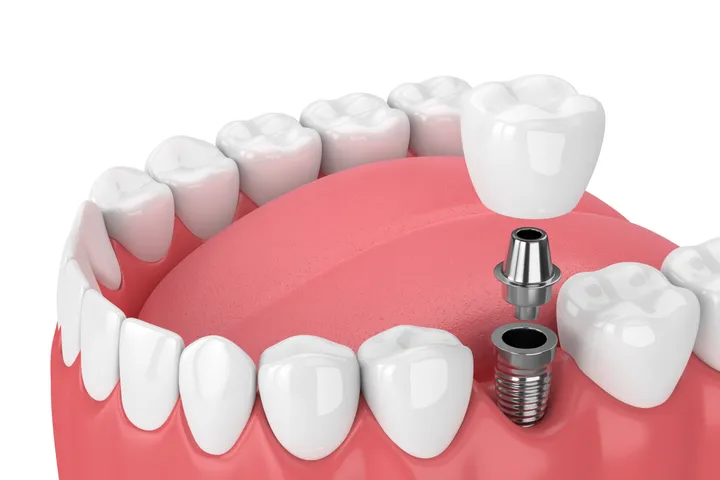
An implant begins with a small titanium post placed into the jawbone where a tooth root once was. Titanium bonds well with bone, and over the following weeks the jaw grows around the post in a process called osseointegration. Once that bond is stable, an abutment is attached to the post. The abutment connects the post to the final crown, which is fitted to match the shape and color of your surrounding teeth.
The result is a replacement tooth that functions like a natural one: it holds its position, does not shift, and supports the bone beneath it. Unlike a bridge, an implant does not require the adjacent teeth to be altered. Unlike a removable partial, it stays in place.
Why In-House Placement Matters
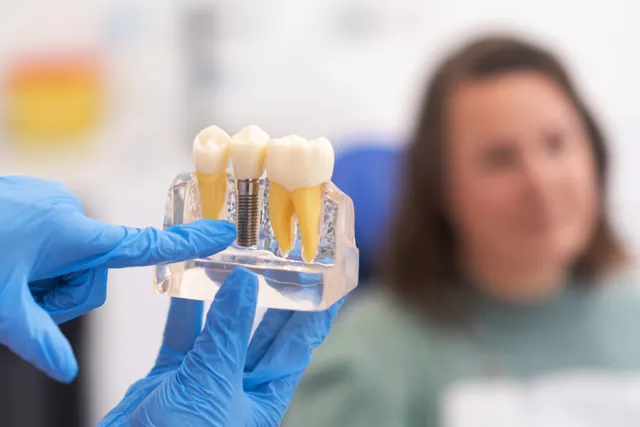
When placement and restoration are done by the same team, in the same office, with the same chart, the treatment is more coordinated. There is no communication gap between the surgeon who placed it and the dentist who restores it. Scheduling is simpler, records are shared, and the people making decisions at each stage know the full picture.
Dr. Bounds completed his GPR (General Practice Residency) at VA North Texas, where he trained extensively in implant placement, bone grafting, and full mouth rehabilitation. That residency experience is what makes in-house surgical placement possible here, without a referral to an outside specialist.
Who Is a Good Candidate
Dental implants are appropriate for most healthy adults who are missing one or more teeth. The most important factors are adequate bone density and healthy gum tissue around the implant site. Both are evaluated at the consultation appointment.
Patients who have experienced some bone loss are not automatically excluded. Bone grafting can often restore the volume needed to support an implant, and in most cases that grafting can be handled here as part of the same treatment plan. The consultation is the right place to review your specific situation and determine the path forward.