
What a Crown Does
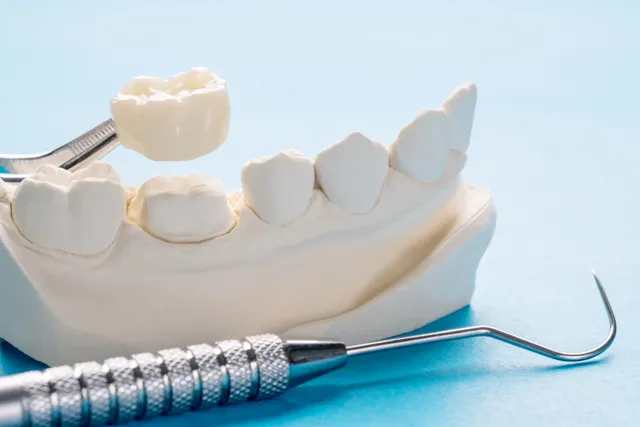
A crown is used when a tooth is too damaged or decayed to be repaired with a filling. It fits over what remains of the natural tooth and restores full function and appearance. Common reasons a crown becomes necessary: a large cavity that has weakened the tooth structure, a crack or fracture that extends below the gumline, or a tooth that has already undergone a root canal and needs protection to remain functional long-term.
Crowns are also used to anchor a dental bridge. The teeth on either side of a gap are capped with crowns, which hold the bridge in place. In that case, the crown is both a structural protection and an anchor point.
What to Expect
Crown placement typically takes two appointments. At the first, we examine the tooth and take imaging to understand the full picture. The tooth is then prepared: shaped to create a stable foundation for the crown. An impression or digital scan is taken and sent to a dental lab where your crown is fabricated.
A temporary crown is placed to protect the tooth while the final one is being made. At the second appointment, the temporary is removed and the final crown is cemented in place, fitted and adjusted for your bite.
Crown materials include ceramic, porcelain, and porcelain-fused-to-metal. Each has different characteristics related to durability, appearance, and how they interact with adjacent teeth. We discuss the right option for your specific tooth and situation at your appointment.
Longevity and Care
A well-placed crown is designed to last many years with normal dental care. Brushing and flossing remain important, even around a crowned tooth. The crown protects the visible structure above the gumline, but the underlying root and surrounding gum tissue are still subject to decay and gum disease if not maintained.
Regular hygiene visits and exams allow us to monitor the crown, the margins where it meets the tooth, and the health of the surrounding tissue over time. Catching a problem early is always easier than managing it after it has progressed.